
Guest Contributor: Stephanie Chong
After working and volunteering in the environmental education space for almost 20 years, I have seen many attempts at collaboration, most of which have never gotten past the concept stage. But when the right time and the right people coincide, when all the puzzle pieces fit perfectly together…well, this is stunningly beautiful, a unique magic that couldn’t have existed in any other way.
To give more context to this story, each of these project partners holds a very special place in my heart. The Shaw Centre for the Salish Sea (SCSS) was one of my first “travel” dates with my partner when we still lived in Vancouver. I challenged him to a fish ID contest. I’ll never make that mistake again; he’s a fish biologist trained by the incredible Jeff Marlieve* and Donna Gibbs, both who made monumental contributions to our understanding of ocean science, conservation, and stewardship in Howe Sound, the Salish Sea, and beyond.
While working in Vancouver, I set up a meeting with the Cowichan Estuary Nature Centre (CENC) about a potential collaboration. It was the first place I started to explore the concept of estuaries. I fell in love with the Cowichan Valley and the people who were so generous with their time and knowledge.
It was at CENC, that I first learned of SeaChange Marine Conservation Society. They mentioned an eelgrass transplant and I promised myself that one day we’d be back to help SeaChange out.
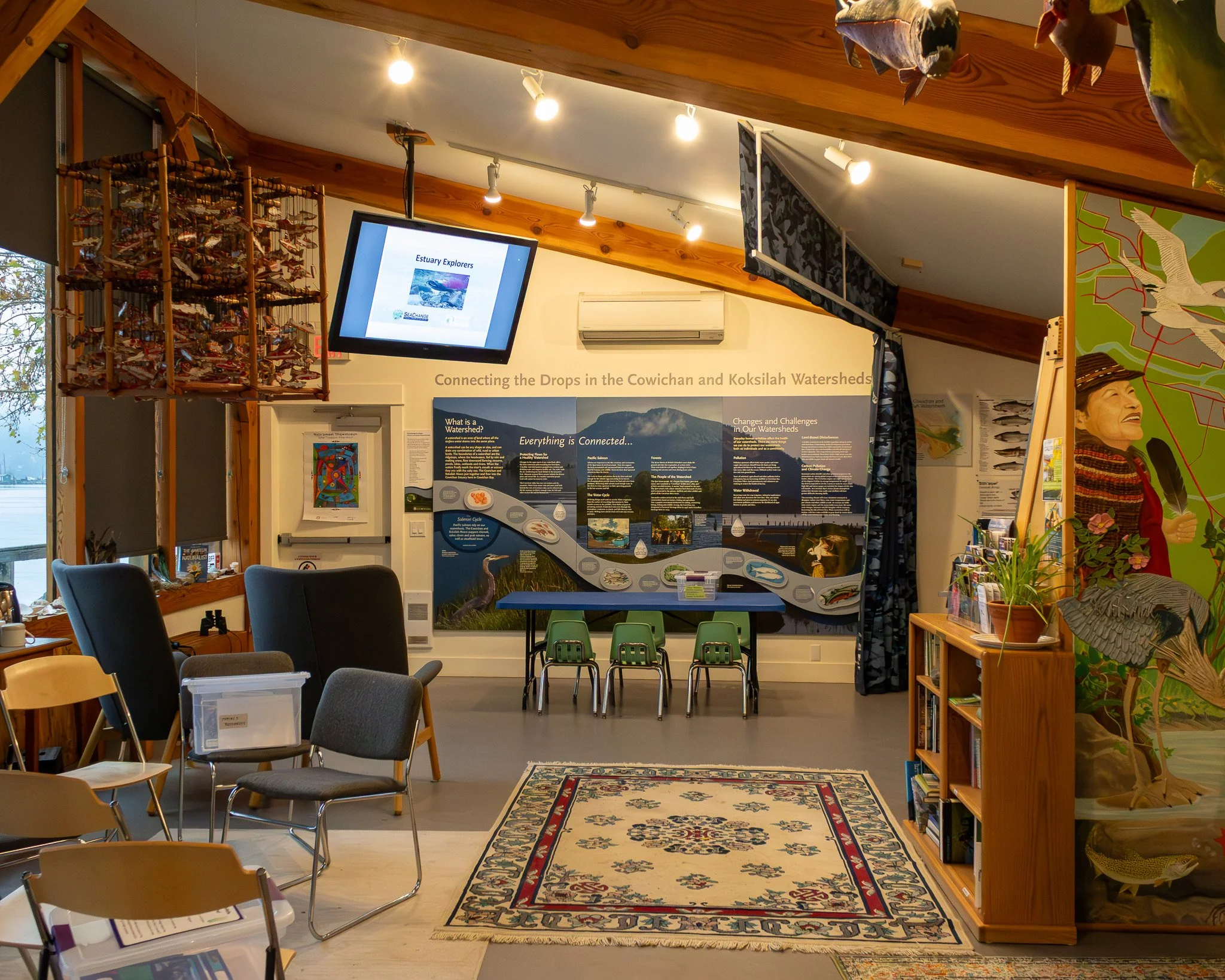
CENC provided a beautiful background for our school programs. Image: Kendra Nelson
Fast forward four years, we had moved to the island and I found myself in charge of developing education and volunteer departments for SeaChange. Looking for inspiration, I turned to all of the people and organizations who had influenced me in the past. From this, an idea started to form. Each of these organizations were amazing in their own right, but each also had a key missing component. What if we got them together and leveraged the strengths of each?
From this idea, a concept was born. CENC would provide a beautiful backdrop for the program and liaise with schools and teachers, SeaChange would design a new program and provide professional development, and SCSS would provide educator support.
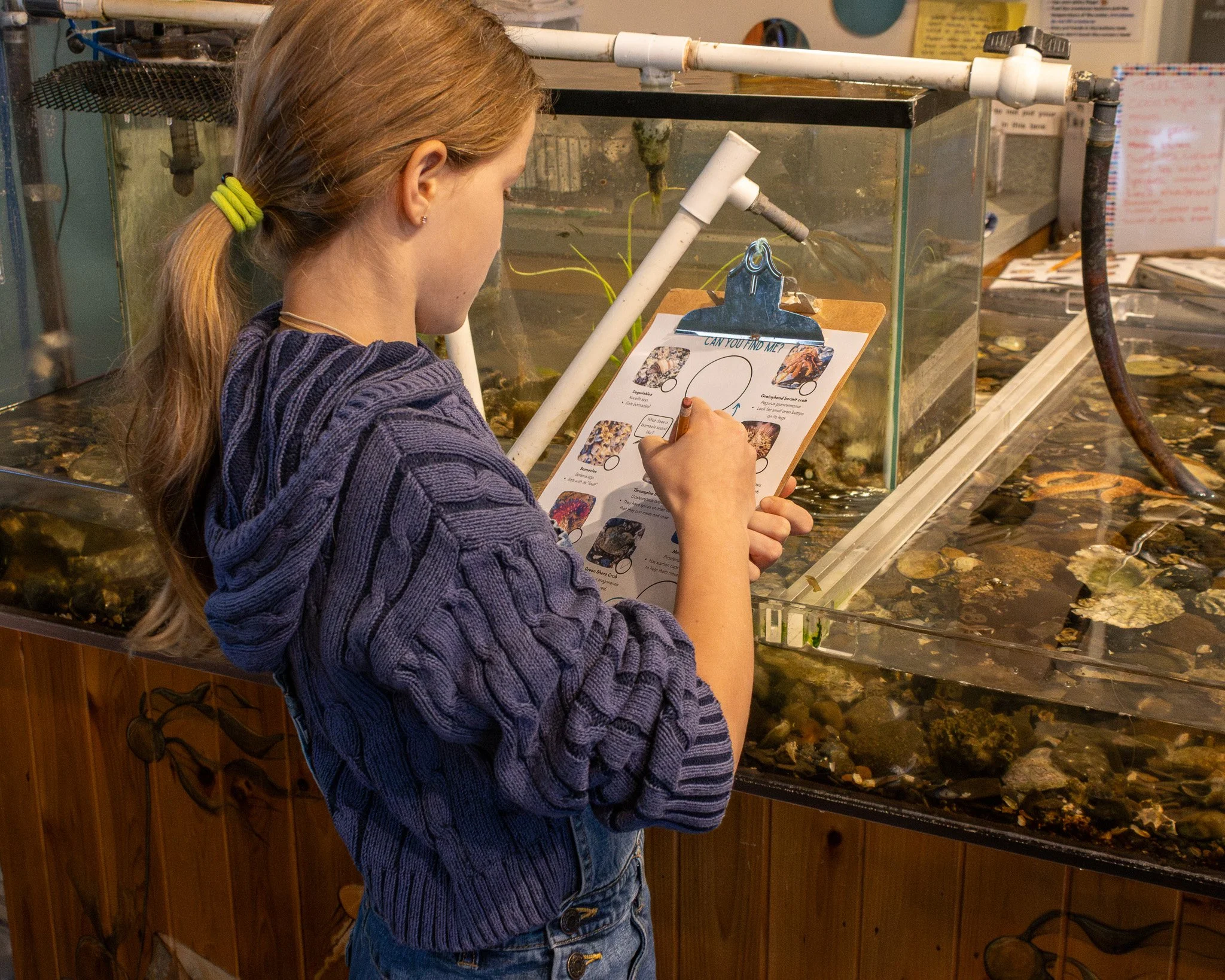
Students always surprised us with their creative ideas at the touch pool station. Image: Kendra Nelson
Three months later, I had developed a pilot program, debuting it with a wonderful team of volunteers at the Nature Centre. The program was designed to give students, parents, and teachers the opportunity for hands-on activities, up close experiences, and engaged discussion. Students jumped like salmon, played charades, examined crab moults, and created their own estuary full of biodiversity. Of course, no visit to CENC would be complete without a touch pool scavenger hunt!
Some of my favourite moments were when conversation took an unexpected turn. We were challenged by the students to find sneaky creatures, to make connections with their everyday lives, and asked questions about animal poop. We were fortunate to have wonderful volunteers and chaperones who shared their stories and knowledge.
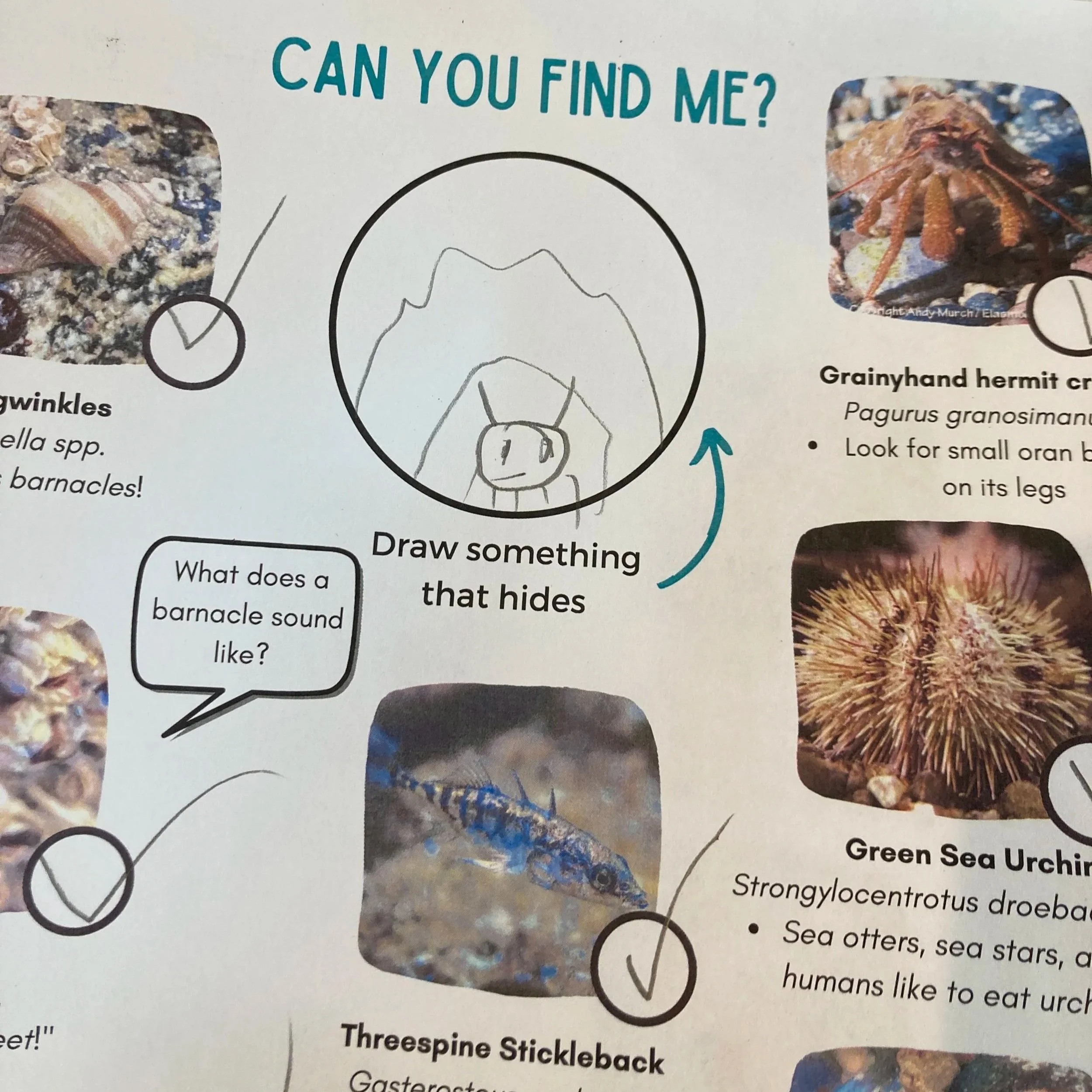
Students always surprised us with their creative ideas at the touch pool station.
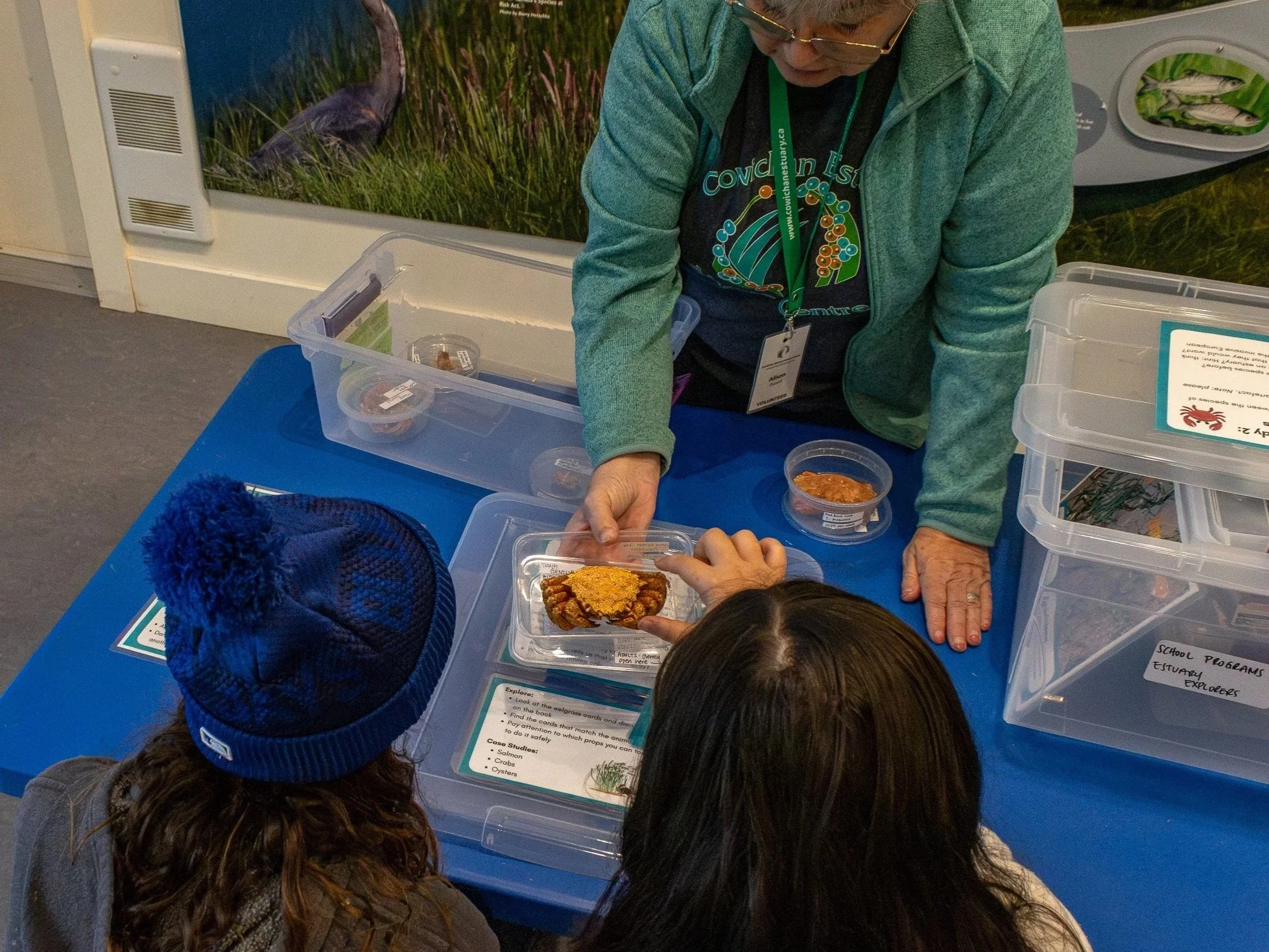
Volunteer Alison encouraging students to touch the hairy legs on a hairy helmet crab! Image: Kendra Nelson
At the end of each program, we encouraged students to think about the impacts both good and bad that humans have on the environment along with how Indigenous peoples have taken care of the lands and waters for time immemorial. Together, we considered what stewardship and being a good neighbour could look like for us with the hope that both students and adults would be inspired to take action in their local communities.
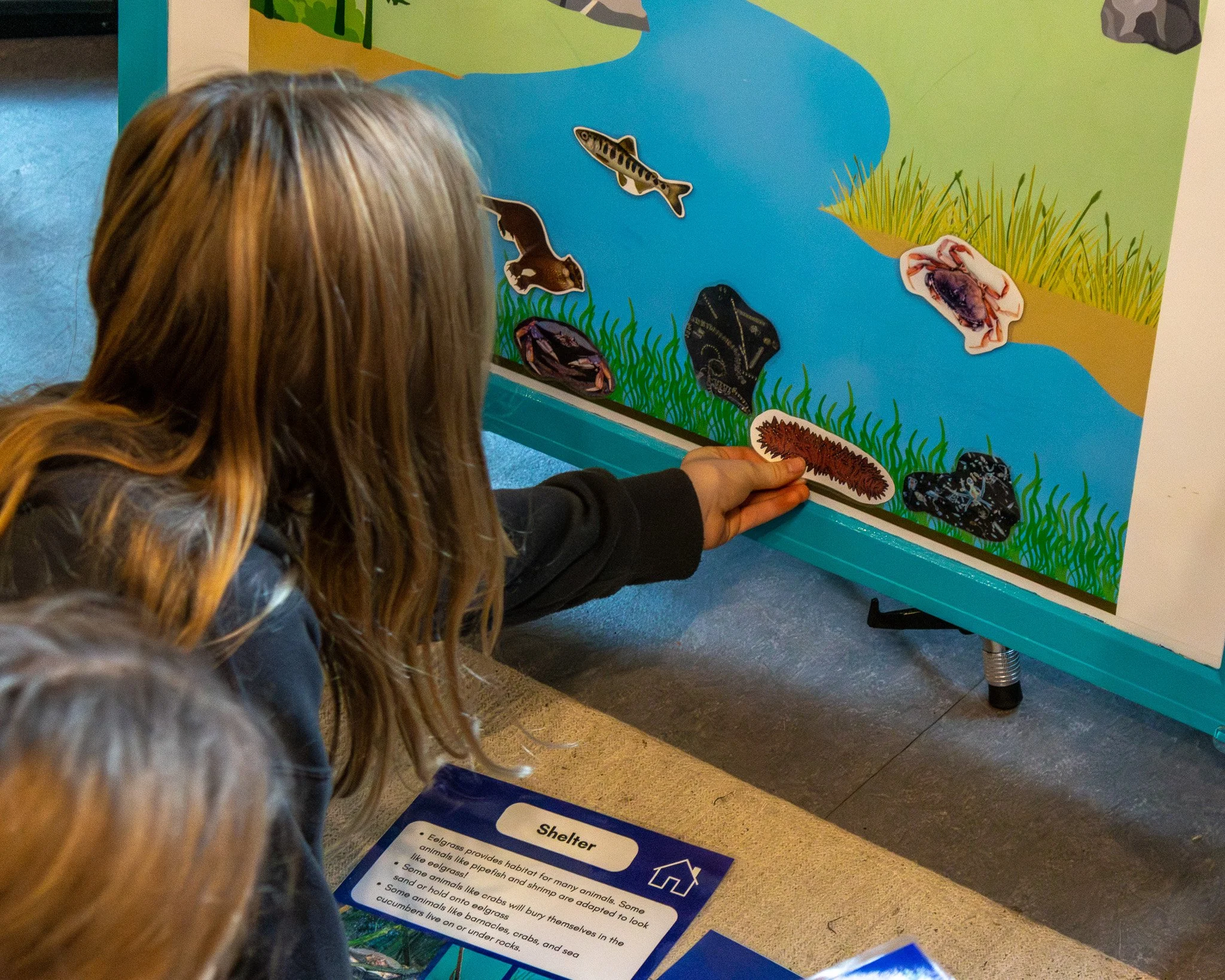
Students explored the interconnectedness of estuary ecosystems—including humans—by designing their own habitats. Image: Kendra Nelson
Over the school season, 17 classes and over 350 students participated.
I am so grateful to have been able to lead this project with the support of all three organizations. With challenging economic times and an urgency for informed, empowered community engagement, collaborations like this one are increasingly needed.
To learn about other similar initiatives, check out the Gorge Waterway Action Society and Ocean Week Victoria, both members of the Ocean Conservation Education & Action Network: South Vancouver Island (OCEAN SVI).
A special thanks to the Vancouver Aquarium and Westwind Sea Labs for their contributions to this program’s teaching materials as well as CENC’s volunteers.
*A shameless plug for Jeff’s new book, Fishes of the Strait of Georgia: More than 240 Life Histories.
Available in our Salish Sea Store.